Showing posts with label fiction. Show all posts

Tuesday, September 16, 2014

The Dead Zone by Stephen King

The Dead Zone by Stephen King (published 1979)

I must first disclose that I first read this book in its entirety in 1990.  At that point, it really was not that long since the events (real and fictional) in the book (the entire 1970s) had taken place.  I was born in the decade in which this book took place.   This was the third or fourth Stephen King title I read (I read as many as possible between 1989 and 1991.)   I think I re-read it a few times over the 1990s, but have not read it at all in at least 15 years (or possibly more.)  I just read the e-book version, and I realized how long it has been.  As an adult who is now significantly older, I think I now appreciate this book in other ways. 

I liked this book when I first read it  because it was less gory than many of Mr. King's other books. I must admit that I still like it because of this (really, in the last 17 years or so, I have had a lot less taste for gore.)  Probably everyone already knows this story already . . . Johnny Smith was in an accident, and is in a coma for almost five years. He now sometimes gets knowledge from  people and things he touches.  

As an adult now, I feel like there was not enough back info about Johnny, more flashbacks about his childhood, etc. 

 As an adult, I understand even better the absolute sadness of  this story.  As a young teen, I cried, but now having had more of my own personal experiences, the absolute sadness of the whole situation Johnny is in just hit me in the gut. 

Back in 1990, after reading the book, I checked out the movie with Christopher Walken from the local library.  I really liked the movie version, although of course there were differences.   Back in 2002/2003ish, I watched the TV show version, which had even more differences . . . it was okay. 

Tuesday, July 22, 2014

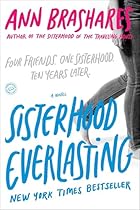
Sisterhood Everlasting by Ann Brashares

Sisterhood Everlasting  by Ann Brashares (published in 2011)

Why didn't anyone warn me about this book?

I had read the other books years ago now, as they came out.  I saw the movie version of the first book first run in the movie theater.

I was not aware of this book for some reason. Or maybe it blipped onto my radar screen so briefly, I heard was it was about, and decided to forgo reading it. 

I checked it out as an ebook.  I was shocked that I had not seen it previously.  To find out what happened to all the girls ten years later as they are on the cusp of thirty?   Yes, please. 

I finished reading it in less than a day.  I just had to keep going, even though at the same time I wondered why?  Why would the author do something so awful to one of the girls?   Sure, it it realistic that something might happen to one of the girls, andneb I know that.  Still, I just wanted a nice, and maybe fairly bland story about their present lives.

Bland it is not.  I really won't share too much of what actually does happen in this book (except that it really takes Carmen too long to realize she is not in the right relationship for her . . .)   I would encourage you that if you read at least the original book, Sisterhood of the Traveling Pants, that you should at least read this one.  It turned out to be a powerful read.  Ms. Brashares crafted it well, unrolling more information just a bit at a time so that the reader needs to just keep reading. I have seen the criticism that the girls remain immature, but that is pat of the point. Most of the girls have remained "stuck" in parts of their lives - mostly emotionally - and this is this story of how they become unstuck and really begin to grow up.

To skip to the end will not tell you anything. 

Friday, June 14, 2013

Before Green Gables by Budge Wilson

Before Green Gables by Budge Wilson (Published in 2008)

I just read this book a couple of weeks ago.

I should have read it earlier, but to be honest, I forgot about it.  I remember a co-worker reading it in 2008, but at the time, my son (the first one) was struggling for his life and then died, and then we were packing up to move 1,800 miles away.   I just did not have the time or energy just then.  And then I forgot about it.  Perhaps I forgot about it on purpose, because it was not written by my beloved L. M. Montgomery.   Nevertheless, it happened, and a couple of months ago, it was suggested to me as something I might like on GoodReads.

I have been more active again on GoodReads in the last few months because I was mostly curious about what recommendations it could produce based on what I've read.   I still don't have everything I've ever read listed there.  I am still short, a bit, on LibraryThing, where I have been a full member for over five years as I still prefer it over GoodReads any day.   I've been trying to get every book I've ever read listed on there, but that will be difficult because even though I started keeping lists of books I've read age age 11, I only counted books that were 50 or more pages in length.   Picture books I am way behind on.  I am already trying to remember.

Anyway, I borrowed this book from the library, and reluctantly started reading it.  Within the first ten pages, I had trouble putting it down.   What I liked the most were the glimpses into the short lives of Anne's parents. There was not really enough about them! (One of my only criticisms of this book.)  The saddest parts were how Anne cannot go to school very often due to the circumstances of the families she lives with.   She wanted so badly to go to school.  She wants so badly to have real family and friends.  Actually, it is fairly depressing at times - but I had to finish the book anyway to make sure everything would lead up to Matthew picking up Anne in Bright River.

The author does not try to capture L. M. Montgomery's voice, which was good, because that would have been difficult to do. The author herself does a fine job in her own voice trying to capture the story of Anne before she arrives on Prince Edward Island.

I award this book five stars, despite it being rather depressing at times!

One more note:  The most upsetting section of this book is when ALL of Mrs. Hammond's children are given away.  She does not get to keep even one of them.   That did make me want to vomit.  Perhaps I will give this book 4.5 stars instead.   

Saturday, June 1, 2013

The Lost Husband by Katherine Center

(I just want to note that I am not being paid in any way at this time for my reviews.  I mainly get books to read from my local public library.  Occasionally I get picked to receive an Advanced Reader Copy from LibraryThing, in exchange for a review. That is it at this time.)

 The Lost Husband by Katherine Center (2013)

Sometimes I have trouble getting into fiction that is intended for "adults" that is not supposed to be full of humor.   This was was not full of humor, but indeed, I had trouble putting this book down.  At the gym I, in fact, opted to walk on the treadmill so that I could keep reading! (This was a week ago.)  

Libby Moran's husband died suddenly a few years ago in a car accident after picking up their daughter Abby.  Abby's leg was crushed at age four in the same accident, and now at age seven, she still has a small limp.  Libby worries about her quite a bit.  Her younger child, Tank, doesn't remember his father at all.  Libby moved back in with her mother after discovering the financial mess her husband had them in (he cashed in his life insurance for an investment at some point.)   She and her mother don't get along very well.  Her mother has been in search of something her whole life, but has no idea what that may be.  Libby finally receives a letter from her aunt Jean, inviting her and the children to come live and work on her goat farm.  Libby accepts, and discovers a whole new life.  

I highly recommend this book!

Rating (1 to 5 stars): 5

Saturday, May 4, 2013

Weather-Related Quotes From Books

Back in the mid-to-late 1990s, I kept a notebook with quotes from books and movies related to weather.  I was a meteorology major for a year, but loved reading about weather. 

These are some selections that I noted.

"Almost overhead now, the tumbling, swirling clouds changed from black to a terrifying greenish-purple.  They seemed to draw themselves together, then a groping finger slowly came out of them and stretched down trying to reach the earth" (254).   - Laura Ingalls Wilder, These Happy Golden Years

"As they dashed into the kitchen the light seemed to vanish, as if blown out by some mighty breath; the awful cloud rolled over the sun and a darkness as of late twilight fell across the world.  At the same moment, with a crash of thunder and a blinding glare of lightning, the hail swooped down and blotted the landscape out in one white fury" (211).   L. M. Montgomery, Anne of Avonlea


"The sun had now been set sometime; heavy cloud whose lower skirts were tinged with sulphurous crimson, lingered in the west, and threw a reddish tint upon the pine forests, which sent forth a solemn sound, as the breeze rolled over them" (406).  - Ann Radcliffe, The Mysteries of Udolpho

"Derry wind speeds were being clocked at an average of fifty-five miles an hour, with gusts up to seventy.  The anemometer in the courthouse registered one gust of eighty-one, and then the needle dropped all the way back to zero.  The wind had ripped the whirling cuplike device on the courthouse roof off its moorings and it flew away into the rainswept dimness of the day" (1042).  - Stephen King, IT

"In the lightning that tore across the sky every few minutes, I could see the clouds were still low and boiling.  I didn't know if we'd be safe anywhere, even when we got out" (66).  - Ivy Ruckman, Night of the Twisters 

"The next day the rain poured down in torrents again, and when Mary looked out of her window the moor was almost hidden by gray mist and cloud.  There could be no going out today" (51).  - Frances Hodgson Burnett, The Secret Garden  

"Suddenly there was no sunshine.  It went out, as if someone had blown out the sun like a lamp. The outdoors was gray, the windowpanes were gray, and at the same moment a wind crashed against the schoolhouse, rattling windows and doors and shaking the walls" (84).   - Laura Ingalls Wilder, The Long Winter 

"I wondered at the beauty of its intricate design / I breathed, the snowflake vanished / but for moments, it was mine" (41). - Jack Prelutsky, It's Snowing! It's Snowing!

"The only thing really that was different about Chewandswallow was its weather.  It came three times a day at breakfast, lunch, and dinner.  Everything that everyone at came from the sky . . . it never rained rain.  It never snowed snow.   And it never blew just wind.  It rained things like soup and juice.  It snowed mashed potatoes and green peas.  And sometimes the wind blew in storms of hamburgers" (7-8).   - Judi Barrett, Cloudy With a Chance of Meatballs 

"It's true there were dark storm clouds - heavy, black, and pendulous, toward which they were driving."  - 'Rocky Horror Picture Show'  [Not a book . . .  but this has always been my favorite line from this movie.]


Thursday, April 25, 2013

V is for Veil of Roses


TitleVeil of Roses  
Author: Laura Fitzgerald
Original Publication Date: 2006
Date I First Read: 2007
Basic Category: Fiction

Basic Summary: A young Persian/Iranian woman named Tami gets a three-month visa to visit her married sister in Tucson, Arizona.   Part of the point of her visit is to find her a husband so that she can stay through marriage in the United States and not have to go back to Iran. She also takes an English class, and gets involved with her classmates’ lives. 

What I Remember About the Book:  I read this book first a year or so before we found out we would be moving out to Tucson for at least four years.   It was on the new book shelf at library where I worked at the time.  I loved the cover, and my husband is of Persian ancestry . . . so I thought the book would be interesting.  It was.  I liked reading about the food and traditions.   I liked that Tami got involved with a non-Persian guy.

I finally met the author, who lives in Tucson, last year.  She is a nice and friendly person!

What I Took Away From the Book:  Love your spouse.  Love your family and friends.  Don’t take your freedom for granted. 

Rating (1-5 stars):  4.7

Tuesday, April 23, 2013

T is for These Happy Golden Years


Title: These Happy Golden Years
Author: Laura Ingalls Wilder
Original Publication Date: 1943
Year I First Read:  1984
Category: Fiction, Juvenile Fiction, Teen/YA Fiction, Historical Fiction

Basic Summary:  In the beginning of the story, Laura is on the way to her first teaching job, which is away from home.  Every week in the cold and snow, Almanzo comes to pick Laura up and take her home to her family.  Later, Laura returns to going to school in town, and many more events take place until the end of the book when she marries Almanzo.

What I remember:  This is hard to say I have re-read this book so often since then.  I was nine-ish when I first read it, though, after I had read the rest of the Little Series over the previous two years or so.  Several things made the biggest impression on me when I first read it, though.   One is when May came home from college in Iowa to visit. Another is the chapter with the tornado with three funnels that kills a boy and two donkeys.   Another is when Laura and Ma are preparing Laura’s clothes for her wedding.   


What I Took Away From the Book:  Don’t go riding out in the country in a buggy when there might be a tornado.  Your true love might show up at the door with wild horses to be broken.  If you are teaching school for the first time, don’t stay in a house with knives.  And finally, life can be difficult, but it gets better. 

Rating (1-5 Stars): 5 Stars (Then and now.) 

Monday, April 22, 2013

S is for The Stand


Title:  The Stand       
Author: Stephen King
Original Publication Date: 1978 / 1991
Date I First Read: 1991 / 1991
Basic Category: Fiction / Apocalypse

Basic Summary:  A virus gets out of a government facility (because in this particular version of the world, a creature known as Randall Flagg makes this happen) and spreads through the world in a matter of days. 99% of the world’s population dies.  The survivors pick a side and gather together to fight the forces of evil. 

Note there is the first version, which was heavily edited and published in 1978.  I read this book early in 1991.  Then the expanded “uncut” edition came out the following summer.   I had to wait in line to get that one from the library! I savored it when I finally got my hands on it.  Fortunately it was during the summer so that I had time to read it before school started again. 

What I Remember About the Book: Stu and Fran.   The baby.  Mother Abigail.   The flu spreading.   Nick Andros. (No, I didn’t name my son after him.  I didn’t even think about that until now.)  Harold. 

What I Took Away From the Book:  Worry about what I would do if I would survive (be immune) such a disaster.  My asthma was not very much under control at the time.  I realized that I would have to break into a few pharmacies and take all of the albuterol inhalers I could get my hands on to keep myself alive.
And learn how to ride a motorcycle, even though I dislike motorcyles. 

Rating (1-5 stars):  4.5 (The lack of good well-written women, even twenty years ago as a teen bothered me. However, I still liked the whole story very much!)  

Saturday, April 13, 2013

L is for A Little Princess


(For the 2013 A to Z Blogging Challenge, I will be featuring one book each day, that begins with that day's letter, that made an impression on me.  This means that for some reason, I didn't just read that book and forget about it.  No, I still think about it after some period of time has passed.)

Title: A Little Princess
Author: Frances Hodgson Burnett
Original Publication Date: 1905
Date I First Read: 1986
Basic Category: Juvenile Fiction / Classic Fiction

Basic Summary: Sara Crewe’s father takes her to England from India to get an education at Miss Minchin’s Select Seminary.  As he is very wealthy, she has her own suite (no roommates for her!) of rooms and a private maid.  Before he leaves to return to India, he buys her the perfect doll to be her friend.  Sara makes human friends as well at the school, and is kind to everyone, even Becky, the young scullery maid.  Miss Minchin doesn’t care for her, in part because Sara already knows French.   When Sara’s father dies, seemingly penniless, big problems lay ahead for Sara.  

What I Remember About the Book: I was in fifth grade when I read this the first time, and sorry that I hadn’t read it sooner.  I re-read it five times at least the following summer (I have memories of reading it on a lawn chair at a campsite, and later in my sleeping bag with a flashlight.)  I had never seen a movie version before, either.   I watched the PBS Wonderworks version later that year when it aired.  I remember most from my first reading of the book was the buying of the doll (named Emily), Lottie’s tantrums, and of course, the night when Sara’s dreams came true.

What I Took Away From the Book: How to be a good friend.  Not to count on money always being there.   Don’t go away to a boarding school for girls.  Sometimes unknown men creeping into a girl’s bedroom doesn’t always mean something bad . . . um, I don’t know if that’s a good lesson.   

There is a sequel, Wishing for Tomorrow, by Hilary McKay that was published in 2010.   I’d always wished that there could be a sequel, but then worried that whoever wrote it would not write it correctly.  I have re-read the sequel twice since the first time I read it.  I love the sequel.  It’s perfect! 

Rating (1-5 stars):  5

Friday, April 12, 2013

K is for Keepsake


(For the 2013 A to Z Blogging Challenge, I will be featuring one book each day, that begins with that day's letter, that made an impression on me.  This means that for some reason, I didn't just read that book and forget about it.  No, I still think about it after some period of time has passed.) 


Title:  Keepsake: A Novel 
Author: Kristina Riggle
Original Publication Date: 2012
Date I First Read: 2013
Basic Category: Fiction 

Basic Summary:  A single divorced mother solves her emotional issues by shopping.  She might lose her children because her younger son was injured in a pile of falling stuff in their house.  She has a hoarding issue, but so did her mother (and the hoarding issue killed her mother.)   It is all a matter of keepsakes  . . . and there is a lot more to the story than first meets the eye.  

What I Remember About the Book:  I just read this book a month ago.  I pulled it off the new book shelf at the local library thinking it looked like something I'd like.    I couldn't put it down, and I had no urge to peak at the ending, either.  (Sometimes, in the middle of a book, if I am vaguely bored, or embarrassed or turned off by a character or situation, I will peak at the end to see if it worth it to continue reading to the end.)   I had to know how things were going to work out.   The author unrolls all of the emotions for each member of the family slowly and deliberately, but it is all very clear, even when things don't seem clear specific characters themselves.   It is well-done.  

I have thought about this book every day in the last month . . . whenever I see myself making a pile or not wanting to get rid of something, I remember this book.  That is why I think this will be one that lingers in my mind as some of these other books have.  
What I Took Away From the Book:  Clean!  Throw away! Do I really need to purchase that now?  Save money! Things aren't  always the memories.  Save a few things that mean the most, and get rid of the rest.  

Rating (1-5 stars):  5

Wednesday, April 3, 2013

C is for A Cousin's Challenge

(For the 2013 A to Z Blogging Challenge, I will be featuring one book each day, that begins with that day's letter, that made an impression on me.  This means that for some reason, I didn't just read that book and forget about it.  No, I still think about it after some period of time has passed.) 


Title:  Cousin’s Challenge, A
Author:  Wanda A. Brunstetter
Original Publication Date: 2010     
Date I First Read: 2010
Basic Category: Fiction / Amish / Romance / Deafness

Basic Summary: This is the third book of a three-book series (Indiana Cousins series.)   In the first book, a group of cousins are going on a trip together in a van.  There is an accident, and some members of the party are permanently injured.  Jolene lost her hearing.  Since the accident she has been away to her aunt’s school, a Mennonite woman who teaches the deaf.  Jolene has learned how to Sign,  and now she is back home.  She has been offered a job to teach a couple of deaf Amish children.   Meanwhile, there is much else going on in the community where she lives.  There are love triangles . . . and disaster after disaster (every second chapter has some kind of misfortune!) 

What I Remember About the Book: I like to read Amish Fiction, to be honest.  I have always been curious about the Amish, and when I was little, we lived in the middle of Indiana Amish country for a few years. The neighbor across the street was former Amish.  Anyway, the thing is that even for me, who tends to like disasters in stories, this book is very memorable for the sheer number of small and large disasters that happen within.  This was my review from when I first read this book:

“I like to read 'Amish romances', and am just finishing this book. Overall, this story was enjoyable. . . but having read the first two books in the series, this one takes the cake in terms of the sheer number of accidents and tragedies! There is a new one (or two) in nearly every other chapter!"  
What I Took Away From the Book:  Some Amish communities must suffer greatly, but yes, it will all work out in the end!

Rating (1-5 stars):  3.5

Tuesday, April 2, 2013

B is for The Blue Castle

(For the 2013 A to Z Blogging Challenge, I will be featuring one book each day, that begins with that day's letter, that made an impression on me.  This means that for some reason, I didn't just read that book and forget about it.  No, I still think about it after some period of time has passed.) 


Title: Blue Castle, The
Author: L. M. Montgomery
Original Publication Date: 1926
Date I First Read: 2000
Adult Fiction / Teen Fiction
Basic Category: Romance-ish

Basic Summary: Valancy is 29 years old, and she is still living with her mother and aunt.   She feels stuck.  And then she gets a letter from a doctor who says she had a heart condition and will probably die.   She throws all caution to the wind in the freedom that the idea of death gives her . . . and her life suddenly changes for the better. 

What I Remember About the Book:  Valancy getting the letter.  Her many relatives.   Her letter to Barney. 

What I Took Away From the Book:  I read this book first when I was 25.  I was worried about being in Valancy’s position love and relationship-wise when I was 30.  I took different steps than Valancy did, but I too threw caution to the wind to some extent with my online dating, and found the one for me. 

Quote: "Valancy did not mind so much being an old maid.  After all, she thought, being an old maid couldn't possibly be as dreadful as being married to an Uncle Wellington or an Uncle Benjamin, or even an Uncle Herbert.  What hurt her was that she had never had a chance to be anything but an old maid.  No man had ever desired her," (1).  

Rating (1-5 Stars): 5 

Tuesday, March 6, 2012

Dreaming in English by Laura Fitzgerald

First of all, I wish I had won this book from the Early Reviewers [LibraryThing]. . . alas, I was not picked for it, though I had read the first book, "Veil of Roses", five years ago or so. Anyway, of course my local library had this book and the first one as the author is local to my present location. Five years ago, I had now idea I'd been moving to Tucson the next year. . . but that is another story. I am still hoping to meet the author one of these days.

I love the character of Tami, and how she develops in this book. She learns to really fight for her freedom and not to give up. I love the relationship between her and Ike. I enjoy how Tami sees the world, too. What sticks with me after finishing "Dreaming in English" are a few things in particular. For instance, Tami points out that Americans seem to find it odd that when you have guests visit, you must have a "giant bowl" of fruit when you serve tea as well as nuts (in our household - my husband is persian-american - because of my nut allergies, bowls of nuts are verboten). I have learned how to serve giants bowls of fruit! Another thing thing that sticks with me are the places and locations specific to Tucson that are mentioned throughout the book. It makes it fun if you can really see the places in your mind. . . but if you've never been to Tucson, it should not take away from your reading experience, either.

I might have missed something, but Alibaba (the local Tucson restaurant) is never mentioned in this book, nor any of the middle eastern stores (we have one we go to on occasion.) I though that was kind of weird . . . I mean, I know my husband's opinion on their (Alibaba's) food, service, ambiance, etc, but apparently none of these characters ever go there? Hmmm.

I,too, hope there might be a third book someday!

Monday, March 5, 2012

Ashfall by Mike Mullin

Today [the day I wrote the review and posted on LibraryThing], at the grocery store, I saw vitamin C tablets. My first impulse was to stock up and buy them all . . . which sums up the impact this book had on me this week. Near the end of the book, the local doctor explains that a lot of people had scurvy and the vitamin C was worth its weight in gold.

Overall, this disaster novel was powerful . . . I could not put it down and stayed up half of the night to finish it. Every few years, a disaster (particularly earth science-related) book gets my attention that pulls me in immediately. I look forward to the sequel.

I have to agree with another reviewer, in that I wish we had a chance to get to know the protagonist, Alex, a little more in the time before the disaster (the huge dormant volcano under Yellowstone blows, and Iowa is in the "red zone"). We get hints as to his previous life, but they are brief and fleeting. What we know most is that he is good at tae kwan do, because that comes in handy in his travels to reconnect with his family.

Wednesday, April 9, 2008

Title: Locked in Time


Locked in Time by Lois Duncan, copyright 1985

Nore has an "uncanny" sense of time. She doesn't need an alarm clock to wake her in the morning, and always knows what time it is. (Of course, this is prior to cell phones, which might make this point moot. On the other hand, it could come in handy if you just know when you wake up in the morning exactly what time it is without a clock around. . .)

Her father has just gotten remarried, much to Nore's surprise. Her father and mother loved each other very much until her mother died just the year before. Suddenly her father, a somewhat famous writer, is in love with this woman who is so unlike Nore's mother, and lives in the bayou in Louisiana on an old plantation. Nore immediately perceives that Lisette, her new step-mother, does not like her and sees her as threat. A threat to what? That's the question. And then there is Nore's new step-siblings, Gabe (who is quite handsome in a teenage sort of way) and Josie, who is 13 and in "that awkward stage". It is Josie who says things that don't always make sense. . . like about the circus fire in 1941 and that she was there. How could she have been there? Why has Nore found 100-year-old pictures of people who looked exactly like Lisette, Josie and Gabe? Not just similar, but exactly. Who are they, really?

I loved this book as a young teen precisely because of the "time" factor. The first time I read this book, I had to know the answers. In addition, I was fascinateds by the idea of immortality. Because I had not yet quite discovered vampire novels, this was a good book that bridged that gap between realistic fiction, time travel, and vampiric immortals in fiction.

Friday, March 21, 2008

Title: The Other Side of Dark


The Other Side of Dark by Joan Lowery Nixon (Copyright 1986)

I read this book around 1988 at age 13. It is about a girl who wakes up one to discover that she isn’t 13 anymore, but now age 17. She was in a coma for four years. She also finds out that her mother was killed in the same home robbery attack that Stacy was injured in. Even before she leaves the hospital she’s lived in for four years, she finds that the media is completely interested in her story, calling her “Sleeping Beauty”. (Although, Stacy points out that this is incorrect – when Sleeping Beauty goes to sleep, everyone else in the castle does, too, so they really don’t lose out on anything.) For her, she went into her come before really maturing, and in four years time, suddenly lots of makeup, shrunken jeans (remember those days?), and punk styles are in. Her best friend from growing up comes around to introduce Stacy to what being a teen is all about. Stacy has no idea. She’s still just getting used to how different she looks.

If this story took place now, not only would the media be getting pictures of her, etc, but the other teens and young adults at the party she goes to would be taking pictures of her on their phones, and chatting about her via text and IM. This would have made things even worse, as the murderer is still around and he knows that Stacy might be able to remember who was there in their house that spring day.

Most of the plot of the story is about who did it – who killed Stacy’s mother and robbed Stacy of four vital years of her life. She’s very angry throughout the book. Hey, I would be, too! The killer is Jarrod Tucker. At the party, he is the one who gets her drunk. Stacy has no idea there is vodka in her pop, and it naive enough not to suspect. When I first read this book, I had more dire suspicions – perhaps Jarrod would spike her pop with some kind of poison like cyanide. In the end, when Stacy has a gun pointed at Jarrod, she does not shoot him. She had previously thought that if she had the chance to do so, she would take it, but then Jarrod tells her what her mother had told him: “It’s all right. It’s all right.” This is what spoke to Stacy: yes, he’s right, that’s what her mother would have said. Stacy didn’t have it in her any more to killed him. She says, “I didn’t really have a choice. Jarrod’s life doesn’t belong to me.”

Things I really noticed during my re-read this week:
- Mid ‘80s punk: There is mention of a punk rocker “Glory Beans”. Real? I think not. I never heard of her then, and if you Google the name, you get a YouTube video with some people doing some thing Glory brand beans. I have mixed feelings about using fake musicians versus real people in fiction. Both have their negatives and positives .

- Shrunken jeans: I noticed this during my youth when originally reading it, but tight jeans were really still in then, too. However, 1988/89 is when ripped jeans were also in – so tight ripped jeans. Really lovely. I never ripped my jeans on purpose, but when they ripped from regular wear and tear, that was fine with me.

- The name Stacy: That is a name of my generation. I haven’t seen so much of this name in kids born in the last 18 years or so, at least. One of the Babysitter’s Club girls is named Stacy, but these books started coming out around the time this book was released, so generation-wise, it makes sense.

- The name Jan: This is my middle name, so I always thought that was neat. However, even in 1988 I thought this name was untrue for a teenager at the time. I thought it was more of a name for my mom’s generation. Lately I have noticed that a lot kids are getting more old fashioned names that go back to my grandma’s generation, such as Evelyn.

- Donna: Stacy’s sister is about 21, is married and expecting a baby. We hear that she has promised their dad that she will still graduate from college. It seemed to me even then that the name Donna was very old-fashioned. I equated it to The Donna Reed Show, which we’d seen on Nick at Nite, and to a book from the early 60s that my mom had (and I will discuss here on another date) – Donna Parker at Cherrydale. We never learn what the sex of the baby is that Donna (Stacy’s sister) is carrying. I always felt gypped out of never knowing what happened. I always wanted to know if the baby was a girl or a boy.

- The Pasta Salad: Donna makes Stacy a chicken pasta salad. Stacy doesn’t eat it because she has no clue as to what it is. Donna makes a comment that nobody knew what they were until recently, and she’d forgotten that Stacy knew nothing of the previous four years. I always thought this was funny, because I rarely ate pasta salads either, back then. First, I did not like cold pasta. Second, they often had chicken, and back then, I hated cold chicken. Third, there was usually some kind of dressing on it, and I hated the taste of the dressing. The entire combination seemed revolting.

- Jeff: He is the narcotics officer working under cover at the high school. He helps protect Stacy, and seems as if he’s making a move to be become Stacy’s boyfriend. Stacy doesn’t know what to think. He’s very evasive at times when it comes to questions about himself. It is not until the very end of the book when he takes the gun out of Stacy’s hand that he tells her the truth. It also makes for a somewhat satisfying ending when he tells Stacy he will wait for her – because he doesn’t want to be just her “first love”, but the “real thing.”

I just realized that my paperback copy of this book, like other paperbacks from the 80s, have a page listed other books by the author along with a little order form. Each paperback title is listed under $3 each. I do not believe that book companies do this anymore. People can just go online to Amazon or Barnes & Noble, find the author, read reviews, and order what they want. I don’t do that because I try the library first. I think books nowadays still have lists of other books, but not the ordering forms.

Thursday, March 20, 2008

Title: Nothing's Fair in the Fifth Grade


Nothing's Fair in the Fifth Grade by Barthe DeClements, Copyright 1981, Apple Paperbacks

Summary: Jennie is in the fifth grade. She hangs around with her two best friends, Diane and Sharon. Their teacher, Mrs. Hanson, asks Jennie to show Elsie, the new girl, around the school. Jenny wishes she hasn't been asked. . . Elsie is the fattest girl she has ever seen, and doesn't want associated with her. Through a series of events throughout the book, Jenny learns about Elsie's life (and Elsie is great in math, and tutors Jenny), and becomes more compassionate. Eventually Jenny and Elsie really become friends.

Doctors making house calls (page 40 - "I'd drink it and throw up. The doctor came. He told mother I was dehydrated") : I thought it was funny back when I first read this, too. I was aware that doctors used to make house calls back in "the olden days", but I was around in 1981 when this was published. My doctor didn't make house calls back then. No, we had to go wait in the waiting room for three hours to be seen finally, because they were always so behind with their appointments. When would the doctor have had time to get in a car and drive to our house? This is something that today's kids really wouldn't get at all, either.

Pop Culture References:
They liked to watch “Mork and Mindy”. Even by the mid-80s when I read this book, I really was not familiar with that show. This was first time we had cable tv in our house, and we enjoyed whatever was being shown on Nickelodeon – mostly shows such as The Monkees, as well as programming like You Can’t Do that On Television, Double Dare, etc. Anyway, part of my point is that this could be relevant today, to today's 10 year olds, but because of the references to shows that were on 30 years ago now, this almost seems like historical fiction at times to someone reading it today. I just looked up Mork & Mindy on IMDB - It was on the air from 1978 to 1982. It seems that the DVDs have been released.

Then there is the music. I love record players and old records. However, it’s funny when they listen to the Bee Gees, and they are changing records. At the time I didn’t blink an eye when Elton JJohn was mentioned, because he was still popular and records were still around though on their way out. Jenny's mom buys a Burl Ives record for Jenny's little brother Kenny. Burl Ives? Even as a kid at the time, I had no idea who Burl Ives was.

Jenny's Dad: He's very opposed to Jenny's mom getting a job, even though her job will help pay for a new car, which they need. He wants her there at home when he wants to eat. Also, he wanted her there to be with the kids, because he goes bowling. He's a very one-dimensional character who is very '50s TV father-like (like the one brought to life in the movie Pleasantville). As a kid, I thought this was just odd, because of course women could work, and in my experience up until the time I first read this book, my dad never went bowling. I thought that was silly. Dads performed weddings and took moms to wedding receptions. Jenny's dad didn't cook. Mine did on occaison, and would make stuff my mom never would - like rhubarb pie.

Elsie loses weight, eventually, as the book goes on. The teacher at school has to help "police" Elsie's diet, because Elsie would beg for food from her classmates. I am sure this was easier, because the students ate their lunches in the class room. I keep pointing out the weird stuff, but I always thought that would be fun, to eat in the classroom. In none of my schools did we ever have to eat in the classroom. We had lunch room space elsewhere in the school. I always wondered in what school DID kids get to eat in their rooms. I always thought that would have been easier, because then you already have your assigned seating, and you wouldn't have to worry about who to sit with, and all of the other anxiety-producing issues that come with the lunch room.

There is perhaps more to say about this book, and I will work on it if time allows. The cover above is my own original copy from back then. I wrote my name on the cover page five times with a variety of writing utensils (a multi-colored pencil, blue ballpoint pen, and two Magic Markers - blue and brown). My mother was tutoring a girl one summer, and used this book. I wanted to make sure I got my book back! I was not trusting it with anyone else.


Sunday, March 16, 2008

Title: Barbie's Adventures To Read Aloud


Barbie's Adventures to Read Aloud by Jean Bethell and Illustrated by Claudine Nankivel
Copyright: 1964 by Mattel, Inc. Cover price: $0.39

Did you know that Barbie circa 1964 had brown hair? I did, but that's only because I sometimes got to play with my aunt's old Barbie doll. As you can see on the cover (Barbie is to the right, and her BFF Midge is on the left), she does!

Did you know that Barbie has a last name? She's Barbie Roberts! And Ken's last name is Carson. In re-reading this book, I find that Midge does not have a last name. Are there still Midge dolls available in stores now?

The front cover, near the bottom, says: "America's favorite foll, Barbie, comes alive in a series of fast-moving, madcap adventures that will have boys and girls alike begging for more. Join her and her friends and let the fun begin!" Really? Boys, too? The cover itself calls out for girls!! Where's Ken on the cover?

This book is really a series of 'episodes' really, a chapter takes us a little farther into 9 months of teenage Barbie's life. I was given this book by my grandpa about 25 years ago. (He and my grandma also brought me another book at the same time, but I will discuss this one later.) I think they thought that I would enjoy this book, and at the time, I was the only granddaughter (they had five grandsons otherwise). I was just about 8 years old. I was the proud owner of one Barbie doll with blond hair. It was fascinating to see a brown-haired Barbie in the midst of 1980s Barbie-blondness. At the time, it was only about 20 years since the book was published.

The first chapter is about Barbie's birthday. It is apparently her sixteenth birthday, and it strikes me as very funny now how this was -- "Overnight you've become a grownup. You're not a baby any more. Of course, Barbie had noticed that when people become very ancient-when they reach twenty-two, for instance - they aren't as happy about having birthdays as they used to be. But she thought she understood why. After you've lived twenty-two whole years, you're probably very tired and feeble" (6). She thinks everyone who's "tired and feeble" and even her not so feeble BFF (in today's parlance) Midge have forgotten her birthday! Oh no! Barbie shouldn't have been worried, however, because her parents have planned a marvelous surprise party for her. Surprise!!

In "The School Play", their English teacher Mr. Sutton announces the tryouts for the school play, which is going to be a fairy tale. In light of all of the recent Barbie movies where Barbie is the princess, this chapter is really very funny and a bit ironic. Barbie spends most of this chapter preparing for the audition - making sure she looks princess-like in her looks, how she walks, and so on. The night before she puts her hair in curlers and goes to bed after lounging like she expects a princess would do. Guess what happens next. . . when she wakes up in the morning, she is all stuffed up, and her voice is hoarse! She can hardly speak! Oh dear! Every thing seems to go wrong. During her audition, the heel of her shoe breaks, so now she is walking oddly, too. What else can go wrong?

Well, luckily for Barbie, Mr. Sutton keeps in her in the play. She'll have the opportunity for stardom that she'd dreampt of. . . but as the "Wicked Old Queen", instead. Mr. Sutton says that she will definitely be the star of the play with this role if she is as terrible in the performance as she was in the audition! Meanwhile, the sterotyping in this book is rather blatant: When Mr. Sutton gives the Princess role to Marcia Nolan, he tells her, "'We can't have a Princess with a short read crewcut'" (67).

How about Barbie's Adventures in High School Musical style? Hmmm. . .

In "Barbie's Big Adventure", we find out this: "Barbie had a job! It was the first job she had ever had, and she was enjoying the new experience very much. She was working as a leader at the summer camp in Willow Community Park" (87). Ken was working at the summer camp, too, as a swimming instuctor. He has a group of little boys, one of whom is very naughty. Barbie takes her group of girls on a hike. The girls have never been in the woods before, and one girl asks if they'll see an elephant. First: "Barbie made sure each girl was wearing comfortable rubber-soled shoes" (89). They use markings of various kinds to mark their path so they can find their way back out of the woods. Then the naughty little boy whom by now Ken has kicked out of the pool due to his naughtiness has wandered into the woods and begins destroying the trail markers.
Never fear - the girls are not lost for a long time. Barbie does a good job with the girls. Ken does try to come to the rescue, though, when a rock with Barbie's lucky hair ribbon is brought back to camp by the naughty little boy.

In a previous chapter, "A Present for Mother", Barbie wants to give her mother something homemade for Mother's Day. However, a 'naughty little boy' comes into play here, too. Barbie buys leather and leather working tools to make her mother a purse. She takes the supplies to Midge's house so she can work in secret. This is when we learn that Midge has a little brother, Albert. When Barbie and Midge take a break from their 'hard work' (Midge is wrapping a bottle of perfume for her mother, which is just such hard work apparently. . .) to drink milk and eat the cookies Midge's mom had freshly baked, Albert slips into Midge's bedroom to cut up all the leather. We just learn that Albert is "naughty" and we never learn anything else about him. I wonder if there was an Albert doll?

There are more chapters that I have not covered, but really you're not missing that much. There is the trip to the beach and the story of the lost little dog. We do learn that Barbie's father, Mr. Roberts, is allergic to dogs, so that's something.

I will probably be reviewing Joan Lowery Nixon's The Other Side of Dark next time.

Thursday, March 13, 2008

Title: Children of the Dust


Children of the Dust by Louise Lawrence. (Copyright 1985)

I read this book in early 1988. I was almost 13. I saw a classmate reading this book. (Megan, I think.) I saw the mushroom cloud on the cover. This was also around the time I had become familiar with Weird Al's song "Christmas at Ground Zero", and these lyrics: "We can dodge debris while we trim the tree / Underneath the mushroom cloud." So naturally, I wanted to read it. At the time, if I remember correctly, we were nearing the end of the Cold War, but the possibility of mushroom clouds still seemed very real.

I found the book in the school library in my junior high. The Media Librarian was Mrs. Page, who was previously my fifth grade teacher. I loved her, and in jr. high, she would often save me books that she thought I'd like. However, this one I found on my own. Also, it again points out the power of peer influence, even when it comes to reading selections. Note: It was most likely this book that really gave me a taste for "disaster" fiction. I have to admit that it was already there (e.g. The Long Winter by Laura Ingalls Wilder), but the disaster in Children of the Dust is man-made. This really woke me up to the idea that people could really be crazy enough to be this destructive.

Seven things about Children of the Dust:
1) The story is told in three parts - "Sarah", "Ophelia", and "Simon". They are each essentially a different generation.
2) It takes place in England, in Gloucestershire. The book opens with a line about how perfect the day was: "It was such a perfect day, a promise of summer with cloudless blue skies."
3) Sarah does not get along well with her step-mother Veronica. They get along better as the end nears for them. They work together to save Catherine, Sarah's little sister.
4) Their dad, unbeknownst to them, survives when he is invited to an underground bunker. He pairs with another woman to conceive another child (Ophelia) to help carry on the human race. They mistakenly think that no one will survive outside.
5) Years later, when Ophelia is a teen, she, a friend, and her dad to go out to warn the people in the outside world that the men in the bunker are going to come to steal their cattle. It is then that they discover Catherine. Catherine is covered in radiation sores, but has managed to have two children who survive - they are mutants: the Children of the Dust. They have adapted to the new radiated environment. Ophelia looks so much like Sarah that Catherine thinks that Sarah survived.
6) Thirty some years later - Ophelia's son Simon has been out with an expedition and is injured. He is taken to the healer in the local mutant settlement where he meets who turned out to be his cousin Laura (granddaughter of Catherine - also known by now as Blind Kate). Laura is a mutant, and at first he finds her repulsive, and then later beautiful as he get to know her and her people.

7) The mutants have mentals powers such as telekenesis that humans always has access to, but never used, and then forgot over time. The mutants have reclaimed these powers. Simon begins to see how the mutants and their powers, and the science that the people in the bunkers have can work together to create a wonderful new world.

Favorite lines from the book:
"They ate by candlelight - fish sticks, crinkle-cut french fries, and green beans, with thawing ice cream for dessert. . . food that Veronica had taken from the freezer and had to be used up quickly" (12).

"Sarah coughed and smiled. Bright blood flecked the back of her hand and she did not worry. Johnson was part of the plan, a man with a vision that she herself would never share. Her part was over, her purpose played out. She had lived for Catherine and now she gave Catherine to him. Finally satisfied, Sarah turned away, leaving man and child together in the rainy darkness" (61).

"From the inner room came a thin baby wail and an echo of girlish laughter, laughter that went on and one, a maniacal glee. Dwight was talking rubbish! Of course the human race was going to survive! Catherine had just given birth to a live healthy child and Ophelia was going to see. . . Gently she opened the shawl for Ophelia to see. The baby was naked, a pale little thing, completely covered in white silky hair, soft and thick as fur. Tiny fingers gripped when Ophelia touched her, and her eyes opened wide. They too were white" (11 7-18).

" 'Government?' said Johnson. 'What government is this? I wasn't aware we had a government, and I certainly didn't vote for them. None of us did. You can't just walk in here, Allison, and expect me to believe you represent some government I've never heard of.'
'I do have credentials.'
'Credentials don't count,' said Johnson" (122).

" 'Psychic,' said the girl, as if she had read his mind. 'I'm a water diviner, among other things, and my name is Laura. You had no need to shoot that dog, you know. I could have controlled it. My mind is stronger than an animal's mind. Stronger than yours, too.'
Simon sat on the crumbling edge of the windowsill.
There was a throbbing pain in his leg.
He did not believe what she told him.
Laura laughed teasingly.
'Once people believed that nuclear holocaust would never happen,' she said" (136-7).


If you liked this book, there is a movie from the early '80s that you should see titled The Day After. I watched this two or three years ago after a colleague suggested it. It takes place in the US, and does not go into future generations of those who survive, but it tells a story that is very scary, and would be at least as scary as this book. I do have to admit, though, that Children of the Dust really ends very positively for the characters involved who go on to create new societies after the destruction.

Sunday, March 9, 2008

Title: The Dollhouse Murders

(Cover of my signed copy in 1986. It was signed inside on the front cover.)

The Dollhouse Murders
by Betty Ren Wright was copyrighted in 1983. I didn't read it until 1986 at age 11. I don't know if I would have ever read it, except for the fact that I had a chance to meet Ms. Wright at the author fair at the Lake Geneva Public Library (Wisconsin) on November 15, 1986. I believe that my mom bought me the book there, and then I took it into the room where the various authors were waiting to sign their books for their adoring readers. At that point in time, I was sure that I was going to be a Writer when I grew up. My mom asked Ms. Wright to tell me that I needed to have another profession, too, so I could earn money and have health insurance as an adult. At the time, I said, no, I was just going to write and become famous. (I know it's still not too late. I can continue working at this. . . )

Ms. Wright was a very kind and gracious woman. I felt more shy than usual in her presence. She was an Author! I couldn't believe that Authors were really very real people. It was quite intimidating for me, but she was very nice (which made me think all Author as nice people, which didn't seem to be the case the next year when I met a different Author - a YA writer - who seemed very put out - but that will be another entry in the future). After meeting her, and reading Dollhouse Murders, I proceeded to borrow the rest of her juvenile/pre-teen books from the library, and to read her new books as the came out even as I got older. I loved her style.

On to the actual book --
Amy finds an old dollhouse in the attic of her aunt's house. It looks completely like her aunt's house, too, inside and outside. Lots of strange thing happen, such as the dolls moving on their own (and this gave me a taste for creepy doll stories - in high school I moved on to Ruby Jean Jensen horror paperbacks, particularly her book Baby Doll.) The back cover blurb says, "Amy knows the dolls are trying to tell her something - but she's terrified to find out what." I had to read to find out what, of course.

The books begins with Amy with her best friend Ellen, and they are out in public trying to look for Louann, Amy's younger sister who is larger than she is but Amy has to take care of because she is mentally retarded. She resents having to take care of her all the time (which some things later in this book resolve - things with their mother, mostly), and runs away to her aunt's house. Her aunt is great, and offers to let her stay there a little while, to get away, even offers to host Amy and Ellen's joint sleepover birthday party. However, her aunt gets angry and upset when she finds that the dollhouse (which was hers when she was younger) has been played with, and the dolls, who represent her aunt's murdered grandparents, are in the positions they were in when they (the grandparents) died. She does not believe Amy when Amy says that she is not the one moving the dolls. It is finally when Louann witnesses it and corroborates the story that Aunt Clare finally believes. They figure out that the dolls/the grandma's spirit is trying to show them where to find the answers to what happened all those years ago. The grandma doll leads them to the house's library room - and a letter is found in a book. It turned out that Aunt Clare thought that she was responsible for the death of her grandparents - that her boyfriend at the time killed them. It turned out it wasn't him at all. Aunt Clare starts looking very young again, and stops beating herself up over it.

It was a very satisfying read. I had already liked ghost stories, but this book I would recommend easily to 8 to 12 year olds. I really, really liked the author, too, as a person. It is important for kids and teens to actually meet the author. It's magical . . .